HUN-REN SZTAKI hosts DiGreeS consortium meeting tackling critical challenges facing the European steel industry
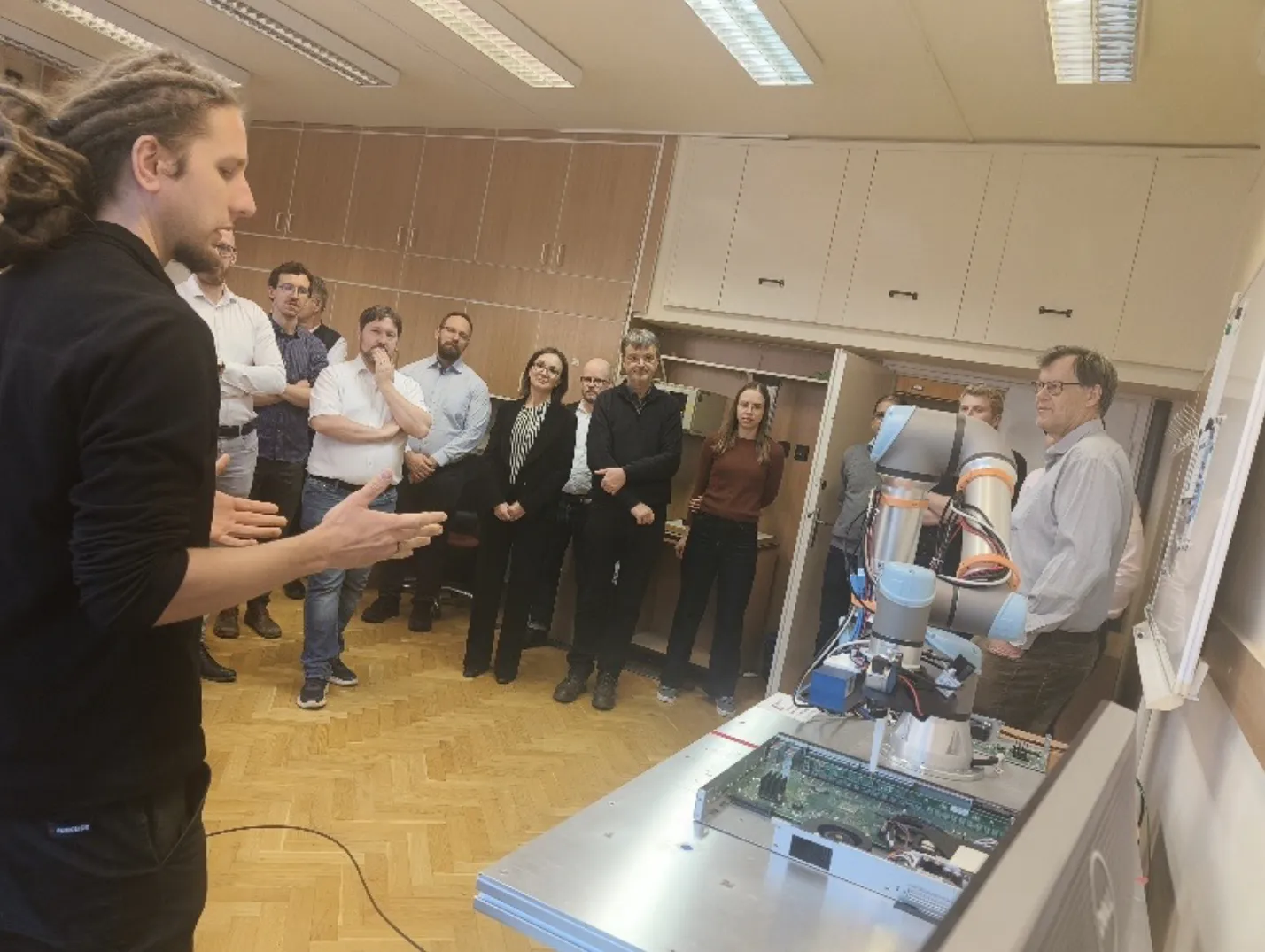
Recently, HUN-REN SZTAKI hosted the consortium meeting of the Horizon Europe project DiGreeS (Digital Twins for Green Steel), organised and led locally by Dr. Elisabeth Zudor, Director's Adviser, and Head of the EU Projects Group at the Engineering and Management Intelligence Research Laboratory of HUN-REN SZTAKI.
The meeting brought together industrial and research partners from across Europe (Germany, Austria, the Netherlands, Belgium, Hungary) to review project progress and to coordinate the next development phase of this strategically important initiative. Active contributors from HUN-REN SZTAKI side are the Research Laboratory on Engineering & Management Intelligence (EMI), respectively the Department of Network Security and Internet Technologies (HBIT).
Hosting the consortium meeting provided an opportunity not only to coordinate technical work, but also to strengthen collaboration between partners and to highlight HUN-REN SZTAKI’s expertise in digitalisation, data-driven modelling and industrial innovation.
The DiGreeS project addresses one of the most critical challenges facing the European steel industry: the transition towards low-carbon and energy-efficient production while maintaining competitiveness in global markets. To achieve the climate goals set by the European Commission, DiGreeS develops and demonstrates breakthrough digital solutions across the entire steel value chain.
At the core of the project is the development of advanced digital twins and data-driven approaches, implemented and validated through three industrial use cases:
- Use Case 1 (UC1) focuses on feedstock verification for the Basic Oxygen Furnace. By combining LIBS technology, image analysis and AI-based classification, the project enables the on-site characterisation of heavy melting scrap directly on truck beds. This approach supports better control of tramp elements and more efficient use of scrap in steelmaking.
- Use Case 2 (UC2) addresses process control challenges in the Electric Arc Furnace. DiGreeS develops a hybrid dynamic process model integrating novel sensors with existing process data to improve monitoring of feedstock melting and foamy slag formation. This enables more stable operation, improved energy efficiency and consistent product quality.
- Use Case 3 (UC3) focuses on downstream processing. By combining production data, upstream process information and new magnetic sensor data, the project aims to optimise levelling and processing steps, reducing rework and scrap while improving final product quality.
By hosting the DiGreeS consortium meeting, HUN-REN SZTAKI EMI and HBIT reinforced their role as an active hub for European research collaboration and as contributors to the digital and green transformation of the steel industry.
